
Earthquakes and hurricanes can cause severe damage to weak buildings. That’s why upgrading load-bearing posts and using earthquake-resistant structural columns is becoming an essential standard in the construction industry.
Later in this blog, we’ll discuss these columns and how they function. We also review additional steps that can be taken to further improve a building’s integrity. Keep reading if you’d like to enhance your home’s safety and reduce the need for column replacement after natural disasters.
What Makes Columns Resistant to Earthquakes?
Earthquake engineering is about focusing on smarter structural behavior rather than just increasing strength. Earthquake-resistant columns are not just stronger; they manage stress more efficiently. Three core concepts play critical roles here:
- Seismic design principles: This is the foundation of earthquake and hurricane resistance. These principles ensure a building can survive extensive exterior forces without sudden collapse.
- How lateral load resistance works: During an earthquake, the major problem is the side-to-side or lateral motion. Working together with beams enables columns to resist this unexpected force.
- Importance of structural ductility: The column material should be able to bend, stretch slightly, and deform without breaking suddenly. Otherwise, it’s unlikely to withstand the stress caused by an earthquake.

Earthquake-resistant structural columns absorb energy and fail gradually. This gives the building enough time to redistribute forces, preventing sudden collapse. That said, steel and reinforced concrete are usually considered the best options, since they provide this controlled flexibility.
Read more: “What Happens If Columns Collapse: Safety and Structural Risks”
How Structural Columns Carry Earthquake Forces
In simple terms, during earthquakes or hurricanes, structural columns must serve as the main pathway for safely transferring forces through the building. This is how earthquake-resistant structural columns ensure a home’s safety.
The structural loads are transferred from beams to columns. Then, these columns move these loads to the building’s foundation, and after that, into the ground. This way, shaking energy won’t be trapped in one part of the structure.
Beams and columns must be rigidly connected to bend together, instead of breaking apart, which can lead to structural failure. This solution helps the structure absorb sideways forces and stay stable under unexpected movement.
Get Expert Help Replacing Columns
Regardless of the type, replacing columns, especially load-bearing ones, is a sensitive task best left to skilled contractors. Our experienced team at Roll the Wall is ready to help. Call now to discuss your project.
Materials Used in Earthquake-Resistant Structural Columns
Let’s use a table to review materials and systems that improve structural safety against earthquakes and hurricanes:
| Material (System) | Key Role | Seismic Earthquakes |
| Reinforced Concrete (RC) | Combines concrete with steel bars to handle compression and tension | Strong, widely used, good energy absorption when properly detailed |
| Steel Systems | Steel columns and frames designed for flexibility and strength | High ductility, lightweight, excellent energy dissipation, performs well under strong shaking |
| Prefabricated Systems | Factory-built structural components assembled on-site | Consistent quality, faster construction, better control of seismic detailing |
All these systems share a common principle. They work by ensuring columns can carry vertical loads and also handle lateral forces without brittle failure.
Engineering Techniques That Improve Column Strength
Making homes safer goes beyond seismic-resistant column design. Here are some practical earthquake engineering techniques.
Column Confinement
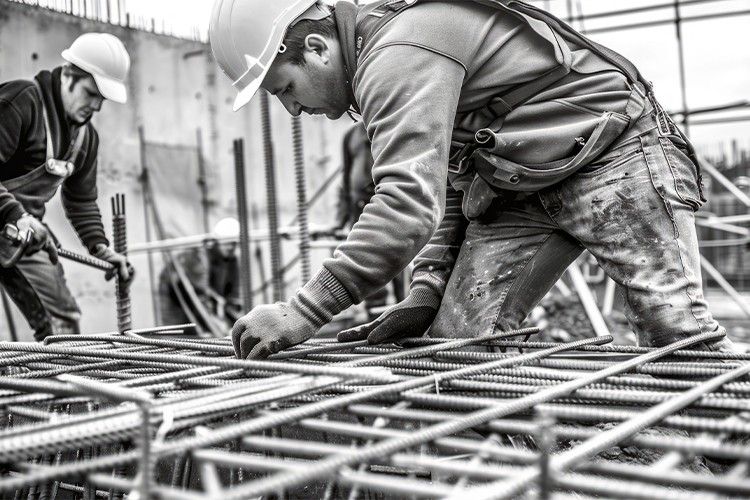
Use closely spaced steel ties or hoops around the core of a column. The purpose is to hold the concrete together during shaking. Using this technique on earthquake-resistant structural columns ensures the core remains intact and doesn’t break apart suddenly. In other words, the column can bend and absorb energy more effectively, rather than failing in a brittle way.
Shear Reinforcement (Stirrups)
Stirrups are small steel loops placed inside load-bearing columns. They’re responsible for controlling diagonal cracks caused by earthquakes and hurricanes. Although these angled cracks may spread quickly, stirrups hold the internal concrete together. This limits crack growth, whether for a round or fluted column.
Ductile Detailing
Since preventing deformation may not always be possible, it is important to design the column to undergo deformation without sudden failure. This is where the ductile detailing proves effective. Cracks and snaps are column replacement signs that must be taken seriously. During an earthquake, controlled deformation helps structural posts to bend in a controlled manner by absorbing energy.
Base Isolation Systems
The core idea is to enable the building to move independently of ground motion during an earthquake or hurricane. Base isolation systems make this possible. As a result, the amount of seismic energy that travels into the columns will be reduced. Simply put, the structure experiences less force, which means less stress is transferred into reinforcement bars.
Upgrade to Earthquake-Resistant Structural Columns for Safer Homes
Earthquake-resistant structural columns ensure the building’s integrity when earthquakes or hurricanes happen. Such posts are designed to handle additional lateral stress, thereby preventing the sudden collapse of the structure.
In addition to column design, adhering to seismic design principles and following earthquake engineering best practices is essential to ensure your home’s safety. Our experienced contractors at Roll the Wall can improve your building’s resistance by applying the latest standard techniques. Contact us today to prevent serious damage to your home.
FAQ
What makes structural columns earthquake-resistant?
They are designed using seismic principles that allow them to handle sideways forces safely. Reinforcement and detailing help them avoid brittle failure. Most importantly, they can bend and absorb energy instead of collapsing suddenly.
Which material is better for seismic resistance? Steel or concrete?
Steel performs better in terms of ductility and energy absorption. Reinforced concrete is more common and performs well when properly designed. In practice, both are effective if detailed correctly.
How do columns prevent building collapse during earthquakes?
Columns transfer loads from beams down to the foundation, keeping the structure stable. They also resist lateral forces and control building movement. This prevents sudden failure and progressive collapse.
What is ductility in earthquake-resistant design?
Ductility is the ability of a material or structure to deform without breaking. It allows columns to bend and absorb seismic energy. This reduces the risk of sudden and catastrophic failure.
What’s your take on earthquake-resistant structural columns? Have you considered upgrading your home’s structural columns for better seismic safety? Share your thoughts or questions in the comments.
