
Choosing the best exterior paint for wood helps you achieve a durable finish that lasts for years with proper maintenance. Additionally, making informed decisions can enhance your home’s aesthetics.
In this blog, we’ll discuss the best options available for exterior wood in the market. Since exterior painting can be time-consuming and expensive, it’s best to choose a high-quality paint to avoid future problems.
Why the Right Exterior Paint for Wood Matters
Wood constantly reacts to the climate. That’s precisely why selecting the best exterior paint for wood is essential. Consistent exposure to sunlight breaks down coatings on the wood surface due to UV radiation. This results in fading colors and a weakening surface over time.
On the other hand, moisture from rain, snow, and humidity seeps into unprotected wood, leading to swelling, contraction, and long-term damage. In addition, temperature swings can cause wood to expand and contract repeatedly. Therefore, only high-quality, flexible exterior paints can withstand this natural movement without cracking.
Simply put, using poor-quality paints will cause predictable problems such as peeling, flaking, blistering, and early fading. In particular, if paint doesn’t adhere well to the surface, water will penetrate behind it, directly accessing the wood. This accelerates rot and forces you into costly repairs soon. Normally, a premium paint lasts between 5 and 10 years. However, choosing the wrong option will force you to repaint the exterior in one or two years.
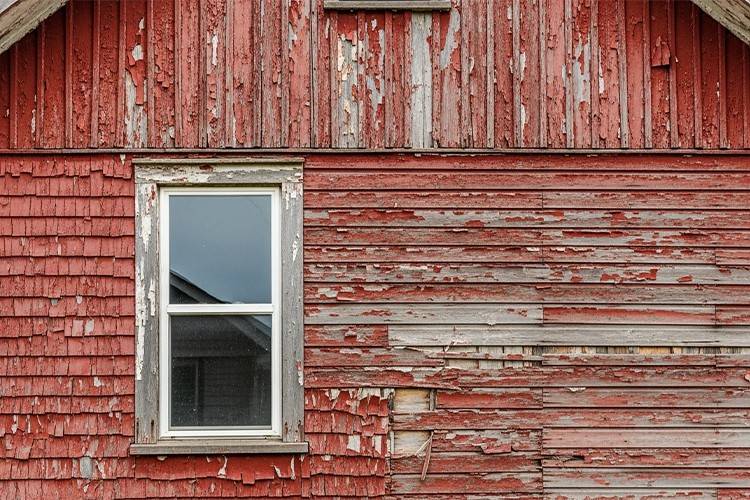
In more severe cases, the surface becomes so damaged that regular repairs won’t be effective, meaning you have to pay for labor and materials to replace the severely deteriorated wood. All these issues can be avoided by choosing the right paint for the wood surface from the start.
Key Factors to Evaluate When Selecting Paint for Exterior Wood
When shopping for the best exterior paint for wood, take these four factors into consideration:
Paint Type
In general, 100% acrylic exterior paint is considered the best for wood, thanks to its high flexibility, perfect temperature resistance, and excellent long-term protection. Oil-based paints deliver strong adhesion, but they’re significantly less flexible and are prone to yellowing over time. Latex paints, although easy to apply and dry fast, are less durable and need more frequent repainting.
Sheen and Finish
The chosen sheen directly impacts both durability and exterior appearance. Eggshell and matte finishes are more muted and deliver a neutral look. However, they’re less durable outdoors and are usually suitable for interior painting. If you insist on such finishes, it’s best to apply them to low-touch surfaces. For high-exposure or high-traffic areas, gloss and satin finishes are the best options, as they’re easy to clean and built to handle outdoor conditions.
Need Proffessional Painting Services?
Let our experienced painters handle the job. Get in touch for a quick assessment and professional service.
Surface and Usage Context
Different wood surfaces face different levels of stress. For example, siding and fencing need flexible, weather-resistant paints that can handle UV exposure, moisture, and expansion and contraction. Wood columns need paints that are highly flexible and perform well in moist environments, since they’re fully exposed on all sides. This prevents rot and further damage.
Read more: “How Can You Stop Rot in Wood Columns?”
Decks are subject to foot traffic and often to standing water. That said, you should apply specialized deck coatings instead of standard exterior paint on such surfaces. Ultimately, trim must be covered with a glossier, more durable finish that resists peeling while enhancing detail to serve aesthetic purposes.
Application and Prep
Our years of experience in painting exterior wood have taught us that properly preparing the surface before applying the paint leads to a longer-lasting finish. So, clean and sand the surface to remove dirt and loose fibers. This allows the paint to bond properly to the wood. All pros who know how to paint a house exterior are well aware that applying high-quality exterior primer enhances adhesion, blocks stains, and prevents wood tannins from bleeding through. It’s also worth noting that almost all exterior projects need at least two coats of paint, and exterior wood is no exception.
Top Product Types and Example Brands for Exterior Wood Surfaces
If your budget is not limited and you prioritize quality over price, choose 100% acrylic exterior paints for their strong adhesion, flexibility, and UV resistance. This type of paint delivers long-lasting results and is highly resistant to peeling, cracking, and fading, far better than other options. Well-known examples include premium lines from Benjamin Moore and Sherwin-Williams.
Mid-range acrylic-latex paints can still deliver solid durability, provided they are paired with proper prep and priming. These paints are available at a lower cost and are considered the best exterior paint for wood if you’re seeking value for money. However, you can’t expect them to have the same durability as a 100% acrylic exterior paint, but their coverage and weather resistance are solid for the price. Behr Premium Plus and Valspar SeasonPlus are common choices in this category.
For horizontal surfaces such as decks, as mentioned earlier, you’ll need specialized deck paints designed to withstand foot traffic and standing water. Keep in mind that regular coatings break down quickly under these conditions. Therefore, you’ll need tougher finishes, like satin or semi-gloss, that are easier to clean and more durable. Liquid Rubber Polyurethane Deck Coating and Rust‑Oleum RockSolid Deck Resurfacer are two good options for decks and any area that deals with foot traffic.
Get Professional Guidance on Selecting the Best Exterior Paint For Wood
Choosing the best exterior paint for wood will guarantee durability and a great-looking finish. In this article, we covered the key factors to consider when choosing the right paint for different types of wood exteriors, including decks, posts, and siding. As a result, you now know how to choose the right option to achieve a long-lasting, beautiful result.
Nonetheless, you may still struggle to find the paint that best suits your specific needs. In that case, we’ve got you supported. Our professional painters at Roll the Wall have years of experience painting house exteriors and can choose the right paint and complete the project for you. If you’re looking for a skilled team to deliver the best results, contact us today.
FAQ
What paint type is best for exterior wood?
The best paint type for exterior wood is 100% acrylic exterior paint because it offers the strongest flexibility, adhesion, and UV resistance. It handles wood movement far better than oil-based or standard latex paints. Most professionals and long-term tests consistently rank premium acrylics as the top choice for durability.
Do I always need a primer before painting exterior wood?
Primer is necessary for bare wood, previously peeling surfaces, or when switching paint types for proper adhesion and stain blocking. If the existing paint is in good shape, lightly sanding and spot-priming may be enough. Using a high-quality exterior primer can significantly extend the life of the paint job.
How many coats should I apply to exterior wood surfaces?
Most exterior wood projects need two full coats for long-lasting protection and even coverage. One coat rarely provides adequate sealing against moisture, UV, and weathering. High-quality acrylic paints perform best when applied in multiple layers.
Can I switch from oil-based to acrylic paint on exterior wood?
Yes, you can switch from oil-based to acrylic paint, but proper prep is essential. The surface must be cleaned, sanded, and primed with a compatible bonding primer to ensure adhesion. Skipping this step often leads to peeling or premature failure.
What’s been your experience with painting exterior wood? Share the paint type you used and how it held up over time.
