
What colors match your home’s style? Every homeowner must answer this question before starting an interior painting project, as the quality of the results depends heavily on the paint colors you choose. In other words, this decision determines whether you’re satisfied with the outcome.
In this blog, we’ll talk about how to choose interior paint colors, taking into account all relevant factors. If you’re looking for an answer to this question, keep reading.
Start With What You Cannot Change
In the first step, check all fixed elements in the house, such as floors, cabinets, countertops, and large furniture, and carefully assess their colors. This is important because these surfaces already set dominant tones and undertones in the space. When choosing interior paint colors, consider their hues and select a paint that complements, not clashes, with them.
When finding the answer to the question of how to choose interior paint colors, you must know that forcing a paint color you like without taking these elements into consideration will lead to poor results. In other words, you end up with walls and surfaces that look off, clashing undertones, or colors that feel completely different once they’re on the wall.
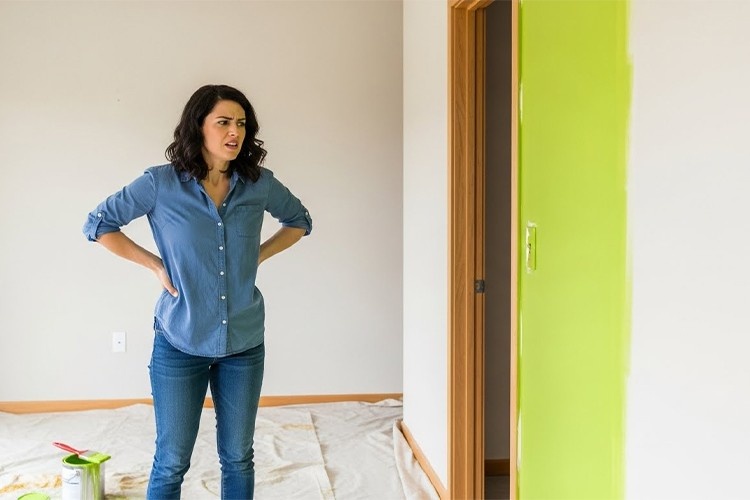
That’s why our expert painters highly recommend identifying whether your fixed materials lean warm, cool, or neutral, and then choosing compatible paint colors. Adhering to this rule of thumb prevents most bad paint color decisions.
Read more: “How to Paint a Room the Right Way for a Smooth, Clean Finish”
Choose Interior Paint Colors Based on Room Function
Homeowners must choose interior paint colors based on each space’s function and requirements:
- Living rooms and shared spaces: Since multiple people use these spaces simultaneously, versatility is more important than personal extremes.In general, balanced, neutral, or warm tones work better in living rooms and other shared spaces within the house.
- Bedrooms and personal areas: Comfort matters more when it comes to personal spaces. Professionals often recommend softer, muted colors or deeper tones to create a calm, restful atmosphere. However, the final choice can vary widely depending on the user’s preferences.
- Kitchens and bathrooms: It’s best to acquire clean, light, and fresh colors to emphasize brightness and cleanliness in these areas. Colors that reflect light well are typically the preferred option for kitchens and bathrooms in house painting projects.
Remember that fixed elements must be accounted for in all areas, alongside functionality, as discussed earlier.
Understand How Lighting Affects Interior Paint Colors
Lighting has a major impact on how paint colors look on your walls. While natural light changes throughout the day, artificial lighting can add warm or cool color casts, shifting the appearance of the paint. Specifically, north-facing rooms tend to feel cooler and dimmer, making colors appear cooler and more muted.
On the other hand, south-facing rooms get stronger, warmer light. This often intensifies warmth and brightness in the chosen colors. Therefore, a color that looks perfect in one room may feel completely wrong in another. Simply put, without considering lighting conditions across different areas, choosing the right interior paint becomes extremely challenging and error-prone.
Looking for Professional Painting Services?
Our experienced painters deliver high-quality interior painting results. If you want a flawless finish without the hassle, reach out to us today.
Pay Attention to Undertones and Color Temperature
Besides the color itself, undertones and color temperature are essential to understanding how to choose interior paint colors. For instance, warm undertones, like yellow, red, and beige, create a cozier feel. In contrast, cool undertones such as blue, green, and gray convey a clean, modern feel.
Note that a common cause of color clash is mixing the wrong undertones, which is why you should understand them before starting the painting project. In particular, with white paint, making the wrong decision may result in a space that looks dull, pink, yellow, or gray, depending on the surrounding materials and lighting.
It’s also worth mentioning that, contrary to popular belief, white is never a truly neutral color, as most whites lean toward warm or cool tones.
Create Color Flow Throughout the Home
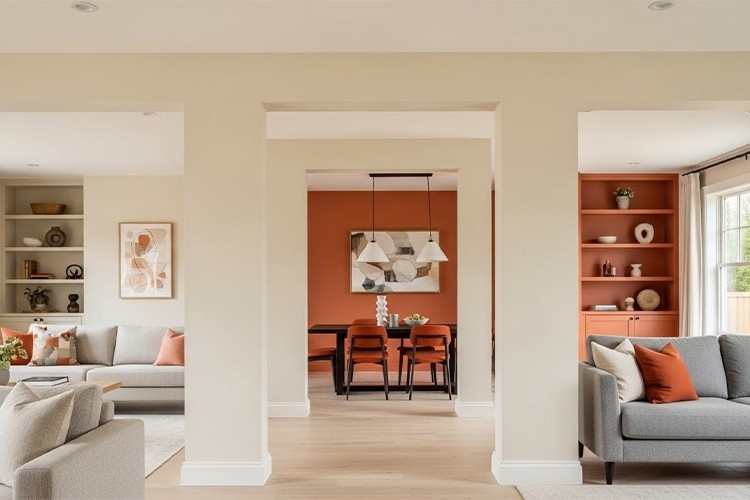
Chosen paint colors must feel connected from room to room, rather than isolating individual spaces. Compared to exterior painting, this level of cohesion is more critical, as rooms are visually linked through hallways, open layouts, and sightlines. By contrast, exterior colors are viewed as a single composition from a distance.
Note that this doesn’t mean using the same color for every room in the house. The key point is understanding when to focus on consistency, such as shared undertones and related neutrals, while demonstrating contrast where functional differences matter. If done correctly, color flow can make the home feel intentional, balanced, and professionally finished, instead of an incoherent look where colors are awkwardly combined.
Read more: “How Much Does House Painting Cost? (Comprehensive Overview)”
Common Mistakes When Choosing Interior Paint Colors
These are common mistakes that DIY painters often make, which you must avoid:
- Choosing paint based on in-store lighting: We discussed the major role lighting plays in how colors look. Store lighting is artificial and controlled. This means that colors may look very different from what they will in your home.
- Ignoring finishes and surrounding materials: All surrounding elements impact how a color looks in practice. For this reason, overlooking finishes and surrounding materials can lead to poor results, as mentioned at the beginning of the blog.
- Following trends blindly: Trends tend to fade quickly. Additionally, not all trendy colors necessarily suit your space, lighting, or fixed elements. So, if you want to follow the latest trends, ensure the specific color palette matches your home’s style.
How to Choose Interior Paint Colors Without Second Guessing
After reading this comprehensive guide, you now know how to choose interior paint colors that work well in your home. We examined all key aspects of the process to help you understand the factors to consider when selecting the best colors for your home’s interior.
Although it’s possible to DIY interior painting in many cases, it’s best to hire professional painters to achieve high-quality results in less time. Our experienced painters at Roll the Wall are ready to visit your home, thoroughly evaluate your project, and begin the job once approved. Contact us today to discuss your project in detail.
FAQ
How many interior paint colors should a home have?
Most homes work best with three to five paint colors total, including neutrals and accents. This keeps the space visually cohesive without feeling repetitive. Too many colors usually make a home feel disjointed and busy.
Should interior paint colors match throughout the house?
They don’t need to match exactly, but they should relate through shared undertones. Consistency matters most in open or connected spaces where rooms are visible to one another. Strategic variation works best when it still feels intentional.
Does lighting change interior paint colors?
Yes, lighting can dramatically change how a paint color looks. Natural and artificial light affect brightness, warmth, and undertones differently throughout the day. This is why testing paint in your actual space is essential.
When should I consult a professional interior painter?
You should consult a professional if you’re unsure about undertones, lighting effects, or the overall color flow of your home. Pros help prevent costly repainting caused by poor color choices. It’s especially valuable for large projects or open-concept homes.
Tried choosing interior paint colors on your own? Share what worked and what you’d approach differently.
