
Your porch columns aren’t just there to hold up the roof; they’re one of the first things people notice when they walk up to your home. So, if you’re looking for the best material for your porch column replacement project, this article is for you! Choosing the right porch column materials is a decision that impacts your home’s curb appeal, durability, and even resale value.
Whether you’re replacing worn-out columns or planning a full porch makeover, understanding your options is key. In this guide, we’ll break down everything you need to know to choose the best porch column material for your home.
Factors to Consider When Choosing a Porch Column Material
Before jumping into the materials, it’s important to understand the key factors that should guide your decision. The best choice depends on your climate, style, budget, and lifestyle.
Weather and Climate Resistance
If you live in a region with harsh winters, humid summers, or lots of rainfall, your porch columns must be able to stand up to the elements. Some materials resist moisture, UV rays, and temperature fluctuations better than others. For example:
- Wood might swell or rot in humid areas.
- PVC and fiberglass resist water and won’t rust, rot, or warp over time.
- Concrete stands strong against storms and wind but may crack with freeze-thaw cycles if not sealed properly.
Did You Know?
According to an article on MDPI, fiberglass, specifically E-glass, is the most commonly used reinforcement material in wind turbine blades due to its favorable balance of mechanical properties and cost. It provides high strength and stiffness, making it ideal for large-scale composite structures like turbine blades. This article mainly focuses on wind turbine blades. However, it also notes that fiberglass’s versatility extends to other applications, such as automotive, marine, and construction industries, due to its corrosion resistance, moldability, and mechanical strength.
Aesthetic Match with Home Style
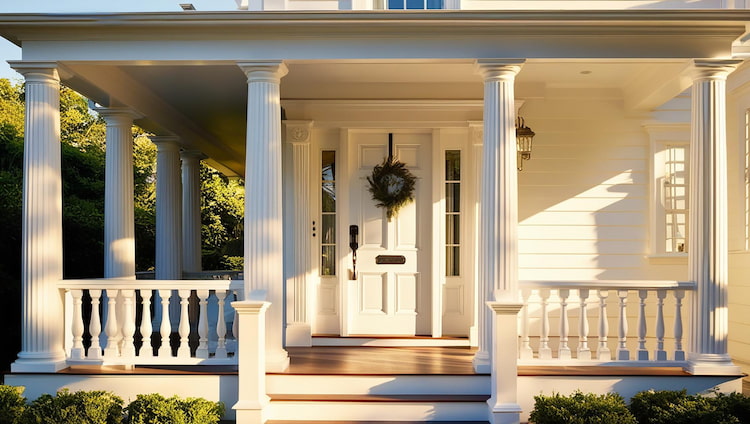
Porch columns should complement your home’s overall design. Traditional homes like Colonials or Craftsman styles may benefit from the warmth of wood, while modern or minimalist homes often look better with fiberglass or PVC columns with sleek lines.
Durability and Maintenance
Some materials last longer and require less upkeep than others.
- Wood may need sanding, staining, or painting every few years.
- Fiberglass and PVC are nearly maintenance-free, requiring only occasional cleaning.
- Concrete is long-lasting but may need sealing or minor repairs over time.
Think about how much time and effort you want to invest in keeping your porch looking great.
Contact Us Today!
Want help matching your column style with your home? Book a free design consultation with Roll the Wall and we’ll guide you step-by-step.
Contact us now for a free consultation.
Affordability
Budget plays a big role. Here’s a quick overview.
| Material | Initial Cost | Maintenance Cost | Long-Term Value |
| Wood | Moderate to High | Moderate to High | Medium |
| Fiberglass | High | Low | High |
| Concrete | Very High | Low | Very High |
| PVC | Low | Low | Medium to High |
Popular Materials for Porch Columns
Now, let’s dive into the most commonly used materials and what makes each of them stand out.
Wood
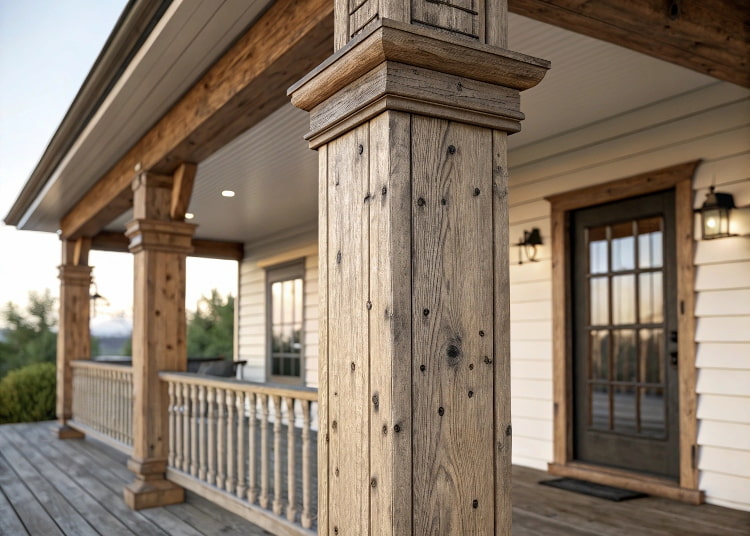
Wood has a timeless charm and has been used for porch columns for centuries. It’s perfect for homeowners who love classic or rustic looks. You can stain or paint it in any color, and it’s available in various styles like square, turned, or fluted columns.
However, wood is also the most demanding when it comes to maintenance. Moisture, insects, and sun can all cause damage if not properly sealed and maintained.
Fiberglass
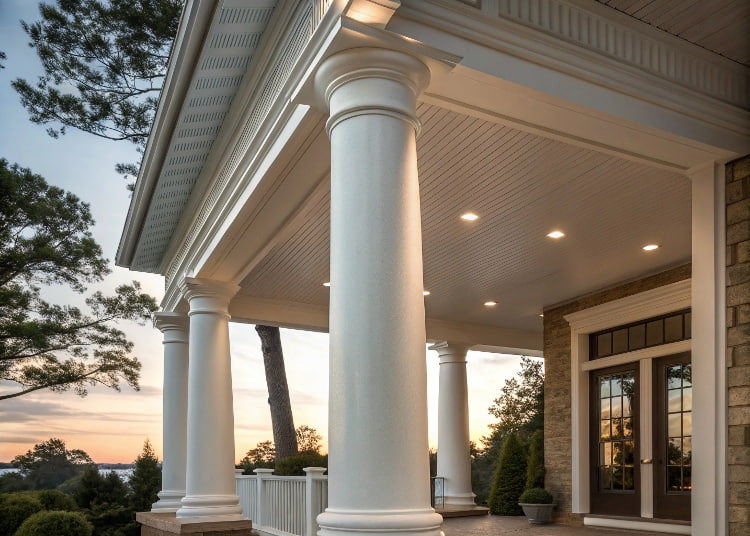
Fiberglass porch columns are a modern favorite. They’re extremely lightweight, easy to install, and resistant to weather, rot, and insects. They also have a smooth, clean appearance that works well with both traditional and modern home styles.
The downside? They can be more expensive upfront, but many homeowners find the low maintenance worth the cost.
Concrete
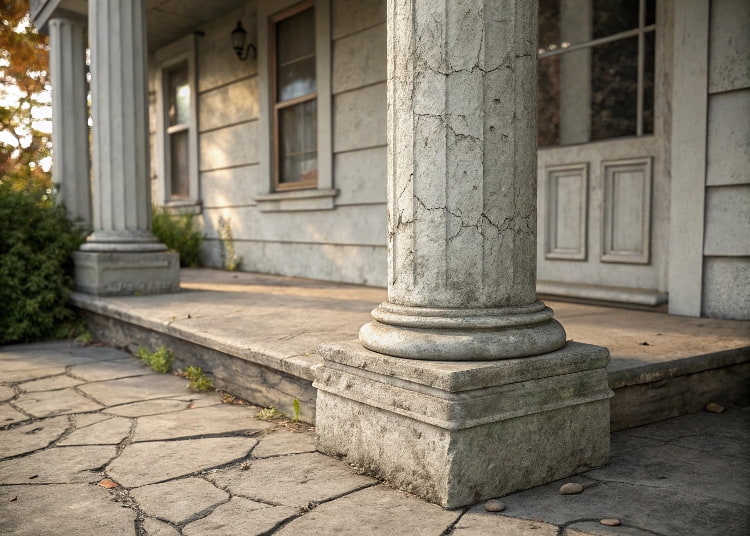
If you’re after strength and durability, concrete is hard to beat. These columns are nearly indestructible and can be customized in shape, size, and texture. They’re especially ideal for large homes or properties that need strong architectural elements.
Concrete columns are heavy and require professional installation. They also tend to cost more, but they can last for decades.
PVC
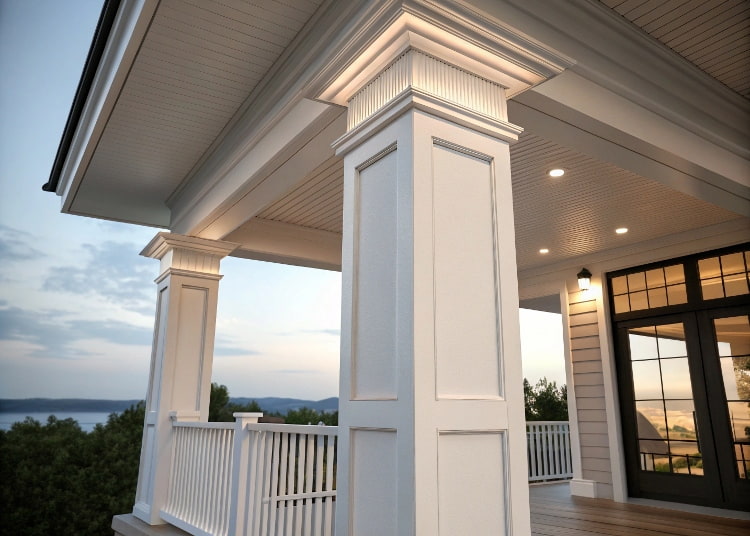
PVC (polyvinyl chloride) columns are a great budget-friendly option. They mimic the appearance of painted wood but are resistant to moisture, rot, and pests. They’re also lightweight and easy to install, making them a popular DIY choice.
PVC doesn’t offer the same structural strength as other materials, so it’s often used as wraps around structural posts rather than as load-bearing columns.
Advantages and Disadvantages of Each Material
Confused? Here’s a quick comparison to help you weigh your options.
| Material | Pros | Cons |
| Wood | Natural look, customizable, classic styles | Needs maintenance, can rot or warp |
| Fiberglass | Durable, low maintenance, modern finish | Higher cost, less natural-looking |
| Concrete | Super strong, customizable, long lifespan | Expensive, heavy, harder to install |
| PVC | Affordable, rot-resistant, lightweight | Limited strength, can look artificial |
Choosing the Right Material for Your Home
Still unsure which one’s right for you? Let us give you a more apparent hint!
- Want a traditional look with rich character? Go for wood.
- Need a modern, low-maintenance solution? Choose fiberglass.
- Looking for the most durable and permanent option? Concrete is your best bet.
- Working with a tight budget and need something quick and easy? PVC is a smart choice.
Also, consider how visible your porch columns are. If they’re a focal point, investing in premium materials might pay off in the long run.
Conclusion
Your porch columns support not only your roof, but also your home’s personality and protect it from the elements. Choosing the right material among fiberglass, wood, concrete, and PVC is about balancing aesthetics, durability, and budget.
At Roll the Wall, we’re here to help you make that choice with confidence. From design advice to full installation, our team ensures your porch columns are as strong and stylish as the rest of your home. We offer various home renovation services, from fiberglass column replacement to exterior painting. Book your consultation with Roll the Wall now, and let’s bring your vision to life.
FAQ
-
What’s the most low-maintenance material for porch columns in a wet or humid climate?
If you’re dealing with frequent rain, high humidity, or coastal conditions, PVC and fiberglass are your best choices. Both materials are resistant to moisture, rot, and insects, and they won’t swell, warp, or peel over time.
-
Can I keep the look of traditional wood but use a more durable material?
Absolutely. If you love the warm, classic aesthetic of wood but don’t want the upkeep, you’re not alone. We offer fiberglass and PVC columns with realistic wood textures and finishes that mimic the look of painted or stained wood.
-
How do I know if my current porch columns need to be replaced or just repaired?
Signs that your columns may need a replacement include soft or rotting wood at the base, visible cracks or splitting, leaning or sagging structure, water stains or mold, and insect damage (like termites). However, some issues can be repaired, especially cosmetic ones like peeling paint or minor surface cracks.
-
Are the materials you use load-bearing or just decorative?
Both! We offer structural load-bearing columns as well as decorative column wraps that cover existing posts. If your porch requires structural support (which most do), we’ll install materials specifically designed and rated to safely bear weight in compliance with local building codes. For homeowners looking to enhance the appearance of existing structural posts, we also offer non-load-bearing wraps in PVC or fiberglass that add charm without affecting stability.
