
Compared to painting interior space, exterior painting is more complex and potentially riskier. However, as long as you follow basic safety steps, you can handle the work on your own, saving costs by avoiding hiring pros.
In this blog, we’ll teach you how to paint a house exterior as a beginner. Covering all aspects of such projects, we’ll discuss simple techniques and methods that help you achieve quality results, regardless of your inexperience.
Is Painting a House Exterior a Safe and Doable DIY Project?
Before explaining how to paint a house exterior, we need to address whether DIY is actually safe. In general, there are no safety concerns with one-story homes on stable ground and with easy access. It’s similar to interior painting but with a few added challenges.
Regarding complexity, if the surfaces only need light prep, beginners can usually handle it. That said, more complicated conditions call for professional help; therefore, hiring experienced painters may seem mandatory.
Read more: “How to Paint a Room the Right Way for a Smooth, Clean Finish.”
On the other hand, taller houses, steep terrain, damaged siding, heavy peeling paint, or any situation that demands working on high, unstable ladders increases the risk, forcing you to avoid DIY.
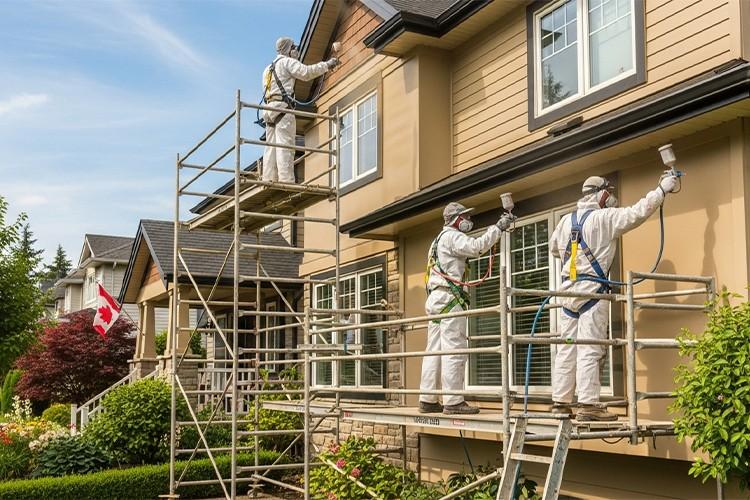
Speaking of maximum safety, ladder stability, proper protective gear, and careful use of tools like power washers are core components that ensure people’s well-being.
Note that although DIY can help you save money on house painting costs, it requires a major time investment. As a result, this guide on how to paint a house exterior may not be very helpful if you have a tight schedule. We recommend that you spend money on hiring professionals and use your time where it has a real impact. Additionally, homeowners with multi-story homes, structural issues, or limited mobility should do the same due to potential safety risks.
Planning and Choosing Materials
First, thoroughly inspect the surface type. This is because each type of material, such as wood, brick, stucco, or vinyl, absorbs paint differently and may require particular prep or primers.
Read more: “A Complete Guide on How to Paint Fiberglass Porch Columns.”
Assessing the surface condition is also crucial for estimating how much prep work you need to do before starting the painting process. For example, in cases of peeling paint, cracks, mildew, or moisture issues, preparation may take longer and require extra tools.
Contact Us for Professional Painting Services
Want a flawless finish? Let our experienced painters handle the job. Get in touch for a quick assessment and professional service.
Afterward, it’s time to choose the materials. Since we’re talking about how to paint a house exterior, you specifically need exterior-grade paints that are designed to resist UV damage, moisture, and temperature swings. When working on bare wood, patched areas, or stubborn stains, primers are essential for sealing and stabilizing these surfaces.
In addition, finishes weigh significantly. The table below helps you decide more wisely:
| Flat | Hides imperfections |
| Satin | Common for siding |
| Semi-Gloss | Works best on trim |
Selecting the right tools is the final phase of preparation. To effectively handle heights, you’ll need stable ladders or scaffolding in more risky environments.
Depending on coverage needs, choose rollers or sprayers, alongside brushes for edges. Since safety is of utmost importance, you’ll also need extension poles for safe reach. This helps you work safely and achieve a consistent finish.
Preparing the Exterior Surface
Once you’ve planned and gathered your materials and tools, it’s time to prepare the site for painting. Here’s what you need to do:
- Clean the exterior thoroughly to remove dirt, mildew, and any loose or peeling paint.
- Fill cracks and holes, scrape old paint, and sand rough or uneven areas to fix imperfections and create a smooth base.
- Apply primer where needed, especially on bare wood, brick, patched spots, and new or unpainted areas, to ensure the paint adheres properly.
- Make sure surrounding areas, including trim, windows, doors, and landscaping, are masked and protected to prevent accidental paint splatter.
Most importantly, to get the results you want and avoid problems, plan the process in the right weather window. Harsh winters, rainy weather, and high humidity are factors that can delay the process and make it much more complex. If possible, choose a time of year when the temperature is mild, humidity is low, and several consecutive dry days are forecast, to ensure the paint cures properly.
Beginning the Painting Process
Now, let’s break down how to paint a house exterior in action. Our pro painters suggest that you begin the work by painting trims, doors, and windows in the same order. This way, you’ll ensure that falling drips won’t damage finished sections and avoid unnecessary rework.
After that, move on to the main wall, and, as with interior painting, paint from top to bottom, covering full sections at a time. In most cases, exterior areas require two coats. After applying the first coat, wait until it dries completely, then apply the second coat.
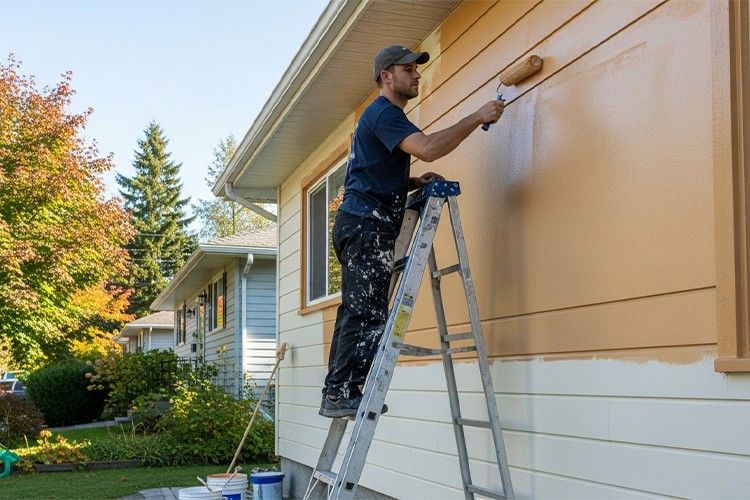
It’s worth noting that the different tools you gathered in the planning phase serve various purposes. For example, it’s best to use rollers for large flat areas, while brushes are mostly useful for painting edges and details. Sprayers are also considered a good choice for large surfaces, but only if you know how to use them properly. For amateurs, rollers are usually the safer choice.
Keep in mind that your safety is more important than anything else. So once again, we have to stress that following safety measures, such as using stable ladders, proper footing, and cautious movement, especially when working at height, is essential.
Post-Paint Finishing and Maintenance
When the job is completed, the first thing you should do is clean up. So, remove all masking tape, wash brushes and rollers, and dispose of debris properly. Since you’re not an experienced painter, it’s normal to miss a few spots or have uneven coverage. Therefore, after removing protections and cleaning up the area, inspect the exterior to detect any missed spots, drips, or imperfections and fix them while everything is still set up. Correcting small issues before they harden helps you get quality results.
When using premium products, a good exterior paint job often lasts 7 to 10 years. To increase the lifespan as much as possible, it’s best to wash the exterior annually to remove dirt and mildew. Furthermore, touching up small chips as soon as you notice them helps enhance longevity.
Ultimately, to avoid surprises, plan for a full repaint a few years ahead to protect the siding and keep your house’s appearance fresh.
This is how to paint a house exterior as a beginner. However, as stated, sometimes hiring professionals becomes the only practical option.
How to Paint a House Exterior and Choose the Right Help When Needed
If you’re insistent on saving money, it’s possible to paint your house’s exterior yourself, as long as you take safety seriously and avoid putting yourself or the home at risk. Throughout this blog, we explained how to paint a house exterior in clear steps, covering everything you need to know.
However, it’s usually best to seek professional help for such construction projects, exterior painting, which naturally carries more risk. Our skilled painters at Roll the Wall have years of experience painting house exteriors and can deliver high-quality results in a short time. If you decide DIY isn’t the right approach for you, contact us for a detailed inspection of your space before starting.
FAQ
How many coats do I need when painting a house exterior?
Most exterior projects require two coats for even coverage and long-term durability. The first coat absorbs into the surface, while the second builds color and protection. High-quality paints or very smooth surfaces may sometimes allow one coat, but two is generally recommended.
Can I paint my house exterior in cold or damp weather?
Painting in cold or damp conditions is risky because paint won’t cure properly. Most exterior paints require temperatures above 10°C and low humidity for best results. Damp surfaces or upcoming rain can lead to peeling, bubbling, or an uneven finish.
Do I need to prime my house exterior before painting?
Primer is necessary on bare wood, patched areas, stained spots, or unpainted surfaces. It improves adhesion, evens out porosity, and helps the topcoat last longer. Even previously painted surfaces may need spot-priming if there’s heavy peeling or exposed substrate.
Should I use a paint sprayer, roller, or brush for exterior painting?
Sprayers offer fast coverage on large areas but require experience to avoid overspray. Rollers are reliable for siding and flat surfaces, giving consistent results with less mess. Brushes are best for trim, edges, and detailed work where precision matters.
How often should I repaint the exterior of my house?
Most homes need repainting every 7 to 10 years, depending on climate, sun exposure, and the paint quality used. Stucco and wood siding may require repainting slightly sooner, while high-end paints can extend the cycle. Regular cleaning and touch-ups help prolong the lifespan.
Have you ever painted your home’s exterior yourself? Share what went well and what you’d approach differently next time.
