
Climate has a significant effect on exterior structural projects, such as porch column replacement. Weather conditions directly affect various criteria, including safety, costs, material performance, and overall quality. Therefore, understanding the challenges you may face during different times of the year is crucial for accurate estimation and better planning.
In this blog, we’ll discuss replacing porch columns in different seasons to help determine the best time for such projects and clarify each season’s advantages, disadvantages, and risks.
Why Season and Weather Matter for Porch Column Replacement
Weather-related challenges associated with seasonal shifts play a crucial role in determining the optimal time for porch column replacement. Here’s how:
Climate Challenges in Canada
This country is known for its harsh weather, with frequent freeze-thaw cycles. Outdoor structures, such as porch posts, are exposed to repeated cycles of freezing and thawing, which can subject them to extreme stress and significantly shorten their lifespan. That’s why cracking, spalling, or shifting of the column base or shaft shouldn’t be unexpected in Canada’s climate.

Additionally, snow and ice accumulation can add extra weight and moisture, exceeding the column’s capacity to handle load and deal with dampness. This accelerates deterioration and damage to columns. Heavy snow and prolonged rain, which are common in most regions across the country, are also among the primary culprits in causing rot in wood, corrosion in metal, and degradation in other materials if not properly sealed and maintained.
Contractor Availability, Cost Variations Across Seasons
During peak construction seasons, which usually start late spring and last until the middle of the summer, contractors are in high demand. As a result, their rates increase. On the other hand, although they have fewer projects to handle in the winter, they still must tackle other obstacles. For example, cold winter weather means shorter workdays, which can extend the column replacement timeline. This translates into higher labor expenses. Moreover, working on cold days requires extra precautions, such as heating and tarping, which adds to the overall costs.
Thus, it’s best to schedule your project for the so-called shoulder seasons (spring or early autumn) if you’re not in a rush and aim to strike a balance between good weather, pricing, and contractor availability.
Material Performance by Season
Each column type reacts distinctly when replacing porch columns in different seasons. Wood posts, for example, are highly vulnerable in harsh weather and are easily damaged by environmental factors. Steel and concrete are much stronger materials. However, the former is susceptible to rust if exposed to moisture. Concrete columns can also be compromised by freeze-thaw cycles, which can cause cracks when water seeps in and freezes.
Fiberglass is the most durable material that can resist harsh climates. It’s rot-proof, moisture-resistant, insect-proof, and dimensionally stable across temperature swings. Nevertheless, all types of materials require proper maintenance and regular inspection. Some need more care, while others can withstand damaging elements better.
Read more: “Deciding Between Fiberglass Columns vs Wood, Concrete, and Steel Columns: What Homeowners Need to Know”
Signs You Need to Replace Porch Columns
Some may assume there is no need to learn about various aspects of replacing porch columns in different seasons. They believe it’s best to plan such projects for warm seasons, when conditions seem most favorable. However, they overlook that the issue can be severe and require immediate attention.
With regular inspections, you can identify column replacement signs early and avoid financial losses and casualties. Our experts recommend that you watch closely for these indicators and ask for professional help if you notice any:
- Rotting base: This is concerning, since a weakened base loses its integrity and maximum capacity to carry the load it’s designed to bear, leading to total structural collapse.
- Leaning or sagging porch roof: Signs of leaning, tilting posts, or sagging and shifting in the roof above the porch are red flags that require immediate action. Such problems indicate that either the column is weakened or the supporting base has moved.
- Splitting, cracking, and peeling paint: Both vertical and horizontal cracks indicate that the column may be damaged and should be repaired or replaced. Additionally, splitting wood and any visible separation on the round or square columns (the shape and dimensions are irrelevant in this regard) signal the need for further inspection.
Remember that before scheduling a porch column replacement, thoroughly inspecting posts from all angles is essential and should be done by skilled contractors and experienced engineers. In some cases, you can fix the damaged areas and save money by avoiding a typically costly replacement. But don’t forget to take the signs discussed here seriously, especially if you notice them on structural columns. The role of column replacement in home safety is unquestionable, as it ensures the structural stability and integrity.
Wondering If Your Porch Columns Need Professional Attention?
Misidentified harmful signs on porch columns, particularly on load-bearing ones, can lead to severe consequences. If you need a professional on-site inspection, contact us today to schedule an in-depth evaluation.
How Seasonal Conditions Affect Porch Column Replacement
In this section, we’ll take a closer look at what homeowners should expect when replacing porch columns in different seasons.
Spring
Milder temperatures and more predictable weather are this season’s advantages. Heavy snow or ice is less likely, ensuring smoother access to the site and fewer delays due to harsh weather. Furthermore, the ground is softer, enabling the progress of necessary structural work beneath the columns without struggling with frozen soil.
On the other hand, there may still be active freeze-thaw cycles during early spring, which, as explained earlier, can cause problems and damage materials. If delaying the project is possible, it’s better to schedule the work in mid- to late-spring, when the early-season drawbacks have passed, and the weather is noticeably warmer.
Summer
The hottest months of the year are the most favourable time for exterior work. Long daylight hours in summer, along with dry weather and favourable temperatures, make material delivery easier, allow workers to access the site without obstacles, and help finish the project faster. Technically speaking, if you’re about to install concrete columns in your porch, this time of year’s weather ensures optimal concrete curing, which helps prolong the post’s lifespan.
On the contrary, contractors and specialists are in high demand in this season, as almost all homeowners prefer to begin and finish the column replacement during this short period. Naturally, higher rates result from lower availability and incur high expenses. In addition to this issue, it’s also important to note that extremely hot, humid conditions, common across many areas of Canada during summer, can affect some materials. For example, wood may expand, or sealants might cure too fast.
Fall
The weather is still manageable in early autumn, the soil remains workable, and, unlike summer, contractor availability rises, since many homeowners have already done their column replacements. As a result, prices and workers’ rates are more reasonable, while it’s still possible to do the job flawlessly.
However, if the construction company can’t finish the project in the early days of this season, the climate will change over time, and the harsh winter weather will create multiple obstacles. Therefore, you should expect extra costs for heating, lighting, and protecting the site from cold weather. It’s also worth mentioning that soil may freeze during the night, which makes base-related work trickier.
Winter
When it comes to replacing porch columns in different seasons, winter is undoubtedly the worst. In general, nobody plans exterior structural projects during winter in this country, unless for urgent cases. For example, structurally failing columns can’t be neglected until mid-spring, as no homeowner wants to risk finding out what happens if columns collapse in person. The only bright side of column replacement in the coldest months is significantly reduced competition, the highest availability and the lowest contractor rates.
However, there are plenty of downsides that will definitely neutralize these advantages. First, the extra cost you should pay to protect the site and material will offset the savings on lower labor costs. The concrete and mortar won’t cure perfectly, even when heaters are used to simulate suitable conditions. The ground is totally frozen, so excavation and footings are extremely challenging. Safety risks increase, and site access is difficult due to heavy snow and icy pathways.
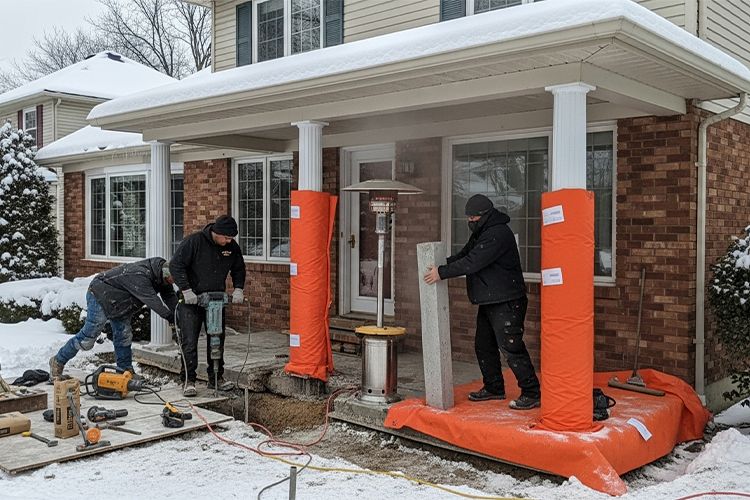
As discussed earlier, various materials also perform poorly under such circumstances, ranging from wood to steel and concrete, alongside adhesives and sealants. Therefore, a low-quality outcome is usually understandable. Fiberglass is the material least affected by external elements. That’s why experienced engineers in this field recommend you opt for fiberglass column replacement, especially in the winter.
In summary, avoid replacing porch columns in cold months, unless your house’s integrity is seriously compromised. If you’re tight on budget, spring and fall are likely the best times of the year for your specific requirements. Lastly, when quality is the top priority, you should accept higher costs and schedule the project for warm summer days.
Ensure Quality Results When Replacing Porch Columns in Different Seasons
Porch column replacement in winter and cold weather is not recommended except when structural risks are present and immediate action is necessary. Summer is often considered the best time of year to schedule exterior projects because of good weather, longer workdays, greater availability, and easier delivery of materials and equipment. However, if you want to spend less, you can plan to replace posts in mid- to late spring or early fall, when construction is still possible with fewer weather-related challenges.
At Roll the Wall, we offer services for replacing porch columns in different seasons across Canada. Our skilled contractors and capable engineers are experienced in removing damaged posts and installing new ones on your property under various conditions to deliver optimal results. Whether you’re in a rush or can wait for the ideal time, contact our team to discuss your specific situation and requirements.
FAQ
When is the best season to replace porch columns in Canada?
The best season to replace porch columns in Canada is late spring to early fall. During this period, temperatures are stable, the ground isn’t frozen, and weather interruptions are minimal. Spring and early fall also offer better contractor availability and often lower costs than the summer peak season.
Can I replace porch columns in winter?
Yes, but only when absolutely necessary. Winter replacement in Canada is challenging because frozen ground, snow, and low temperatures affect footing stability and curing materials. If it must be done, contractors use heaters, tarps, and winter-rated materials to ensure safety and proper installation.
What materials last longest under Canadian weather?
Fiberglass and steel columns last the longest under Canadian weather conditions. They resist moisture, temperature fluctuations, and pests better than wood, which can rot, and concrete, which may crack from freeze-thaw cycles. Fiberglass, in particular, offers excellent durability with minimal maintenance year-round.
How do I tell if columns are load-bearing or decorative?
To tell if a column is load-bearing, check whether it supports the roof, beam, or balcony above; removing or damaging it causes visible sagging or movement. Load-bearing columns are usually aligned with other structural supports or beams inside. Decorative columns, on the other hand, often sit in front of structural posts or are hollow with no direct weight above them.
What permits do I need in Canada?
In most parts of Canada, you’ll need a building permit if the porch columns are load-bearing or if the replacement alters the structure’s design. Decorative or non-structural replacements usually don’t require one. Always confirm with your local municipal building department, since requirements vary by province and city.
If you’ve replaced your porch columns before, tell us which season you chose and how it went. Did weather conditions make the job easier or harder?
