
In general, seeking help from a structural engineer for column replacement is usually necessary. This is especially true if you’re dealing with load-bearing pillars. However, skipping expert inspection and planning may be acceptable in limited cases.
In this blog, we’ll explain what structural engineers do in such projects and what the risks are of not involving them when it’s required by law.
What a Structural Engineer Actually Does in Column Replacement
Structural engineers have a wide variety of responsibilities in column replacement, such as:
Structural Calculations
Whether it’s a porch column replacement project or an interior post removal, structural calculation is the top priority. Simply put, a structural engineer analyzes the amount of weight each column carries. This includes loads from floors, roofs, and anything above them. This helps safely redistribute the load.
Beam sizes, material strengths, and load paths will be calculated through this process. This ensures the new support system can safely handle long-term stress.

Load Transfer Analysis
To understand how the building’s weight is currently supported by existing columns, structural engineers analyze load transfer. This helps determine how the load will be redistributed once a column is removed or replaced. The expert’s responsibility is to design a new load path that maintains the building’s structural integrity.
Beam Sizing (Steel / LVL)
It is the structural engineer who determines the type and size of the replacement beam. This part of the process is important because miscalculations may lead to column failure in a short time and cause serious damage.
Our professionals say they assess different factors to find out which type of material is best for each project. For example, steel performs best in some cases, while LVL or engineered wood performs better in other situations.
Read more: “The Essential Role of Column Replacement in Home Safety”
Engineering Drawings
Specialized workers use detailed plans to understand how to execute the column replacement correctly. A structural engineer for column replacement provides precise specifications, which help prevent common mistakes during column replacement.
Moreover, these drawings are needed for permits and regulatory inspections. Keep in mind that without detailed blueprints, even a well-calculated design can be misinterpreted on-site, leading to costly or dangerous failures.
When a Structural Engineer for Column Replacement Is Required
In some projects, structural engineering for column replacement is mandatory and cannot be overlooked. For example:
- Removing load-bearing columns: Carelessly removing structural posts is extremely dangerous and can cause catastrophic disasters. That is why it’s critical to seek help from a structural engineer when dealing with such columns. They can assess the impact and design a safe replacement plan.
- Modifying the structure: Any changes that involve beams, walls, or the support system as a whole need professional inspection to prevent weakening the building.
- When building permits are required: Authorities ask for stamped drawings from licensed structural engineers before approving permits for your structural work.
- Changing the foundation or redistributing the load: If a wood column replacement or removing any other type of post affects how weight is transferred to the foundation, you’ll need a professional assessment by an engineer. This ensures the new load path is stable and code-compliant.
Get Expert Help Replacing Columns
Regardless of the type, replacing columns, especially load-bearing ones, is a sensitive task best left to skilled contractors. Our experienced team at Roll the Wall is ready to help. Call now to discuss your project.
Although recommended, you can skip structural engineering for column replacement in some specific conditions and reduce costs.
Cases Where You Might Not Need One
Decorative columns, which bear no load, don’t need a professional assessment before removal. Additionally, doing a minor replacement that doesn’t compromise safety or affect load distribution can be done without detailed blueprints.
In other words, skipping structural engineering for column replacement is possible when the work is more cosmetic than structural.
Warning: Before making any decisions, ensure the column you plan to replace is non-load-bearing. In many cases, what looks decorative is still structural, and misidentification can lead to serious structural issues
Risks of Replacing a Column Without a Structural Engineer
Structural failure is the most critical issue that can happen because of skipping structural engineering for column replacement. When a building can’t safely support its own weight, uneven load distribution puts too much stress on load-bearing columns. Even if it doesn’t happen right away, cracks in walls or ceilings will be formed over time due to this mistake.
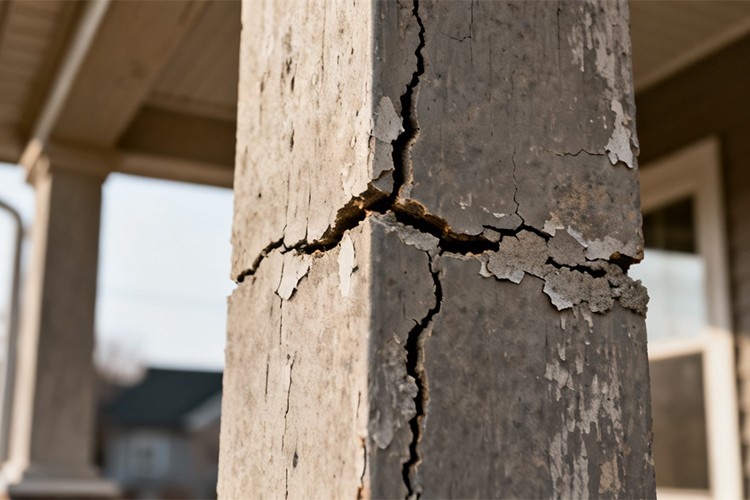
Beyond the physical damage, legal and financial consequences are highly likely. As mentioned earlier, in many cases, permits are required for structural changes. As a result, progressing without a qualified engineer’s inspection can lead to permit violations and fines.
Ultimately, you may face insurance problems as well. Without a proper, stamped plan, your insurance may deny coverage. This means homeowners will be fully responsible for repair costs and any resulting damage in the future.
Structural Engineer for Column Replacement: Plan It the Right Way
Load-bearing columns are responsible for carrying part of the building’s weight. Therefore, when working with them, you’ll need a structural engineer for column replacement. Meanwhile, decorative posts can be replaced or removed without professional inspection at a lower cost.
Structural columns play a crucial role in maintaining a building’s integrity. This is why we strongly suggest you avoid DIY when replacing or even repairing them. Our experienced contractors at Roll the Wall can handle your project with proper planning and careful inspection. Contact us if you’re interested in our services.
FAQ
Do I need a structural engineer to remove a load-bearing column?
Yes. Removing a load-bearing column changes how weight is supported throughout the structure, which requires precise calculations and a proper replacement design. Skipping this step puts the entire building at risk of structural damage or failure.
Can I replace a support column myself?
Technically, you can, but it’s a risky move unless the column is confirmed to be non-load-bearing. Structural columns require temporary supports, accurate load handling, and proper installation. Most homeowners should leave this to professionals working from engineered plans.
Do I need a permit for column replacement?
Yes, if the column is structural, a permit is usually required. Local building authorities typically ask for stamped engineering drawings before approving the work. Without a permit, you risk fines, failed inspections, or issues when selling the property.
What type of beam replaces a column?
Common options include steel beams and LVL (laminated veneer lumber), depending on the load and span. Steel is stronger and allows for longer spans with less bulk, while LVL is more common in residential projects. The right choice depends on structural calculations, not preference.
Have you ever replaced or removed a column in your home? Did you involve a structural engineer? Share your experience in the comments.
