
Many porch column replacements happen because of structural failure risks, which can be a serious danger to both human life and the integrity of the building. Warning signs such as cracks, material degradation, deformation, misaligned doors and windows, unusual stains, water leakage, or a sheared and crushed base should never be ignored. Understanding what happens if columns collapse is essential, since the results can range from partial damage to complete structural failure, putting safety and property at risk.
To prevent structural column failure:
- Opt for redundancy in design to share the load across multiple paths
- Follow codes to ensure safe construction
- Retrofit columns to increase their strength
- Design columns to be able to bear unexpected extra loads
- Incorporate seismic protection features to withstand earthquakes
- Increase the load capacity beyond the standard to increase safety
If you want detailed information on this topic, stay tuned.
What Happens If Columns Collapse
Various outcomes are possible when columns collapse. Beyond the risk to human life, structural impacts are immediate and severe. A single column collapse can trigger partial or total collapses. Think of it as a chain reaction; one failure can trigger widespread destruction.
The collapse of interior columns can even cause exterior walls to cave inward.
In 1993, Thailand’s Royal Plaza Hotel collapsed completely. Its support columns had weakened over time, eventually causing the entire structure to fail. This tragic incident led to the deaths of 137 and injuries to 227.
Common Causes of Column Collapse
Our expert contractors suggest that there are five common causes that compromise column integrity:
1. Slenderness Issues (Buckling)
Columns that are too long and notably slim are more susceptible to buckling than to compressive failure. The higher the slenderness ratio, the higher the risk of deflection under heavy loads.
2. Design and Construction Errors
Design, construction, or installation mistakes can compromise structural performance and lead to eventual failure.
Minor and major errors, such as incorrect reinforcements and poor connection detailing, will weaken columns structurally, making them more prone to cracking and total failure.
3. Material-related Problems
Flaws in the material used to build a column will reduce its capacity to bear load, increasing the risk of structural failure.
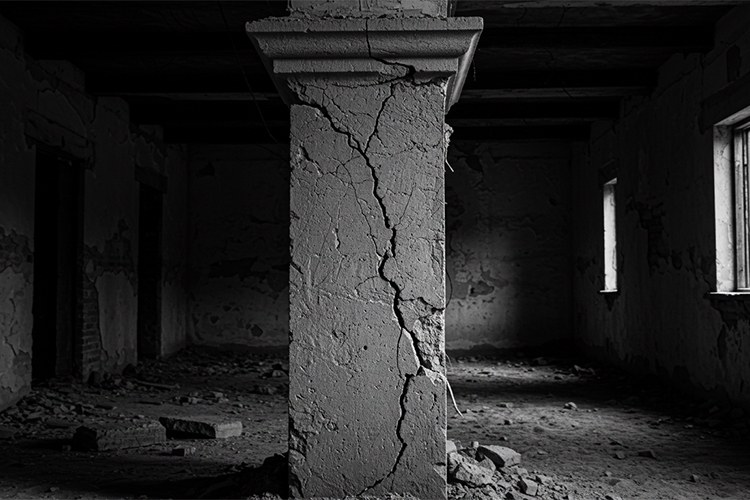
For example, defects like internal voids or cracks significantly compromise the column’s strength.
4. Overloading the Column
Each column is designed to bear a specific amount of load. Applying more than the determined amount, whether by intent or by mistake, can lead to column collapse due to excessive load.
5. Foundation Movement
Neglecting to prepare the foundation before installing the column will endanger the stability of the column’s base. Uneven soil settlement or similar issues can cause a column’s base to shift, jeopardizing the structural integrity of the entire building.
Warning Signs to Watch For
These signs may indicate failure of a load-bearing column or the surrounding structural system.
- New or widening cracks
- Rust or rot on steel and wooden columns
- Bulging, leaning, or visible deflection of the column
- misalignment of doors and windows
- Water leakage, stains, and spalling
- Shear and signs of crushing at the base
It’s vital to monitor columns regularly and respond quickly to any noticeable changes. If you notice any of these warning signs, take immediate action to prevent catastrophic damage.
Does the Column Need to be Replaced?
Not all damaged columns require replacement. In many cases, repair is possible and far more cost-effective. If you’re unsure whether your column needs repair or replacement, contact us for a professional evaluation.
Naturally, the next question is: what steps should you take? We’ll explore that next.
What to Do If a Column Shows Signs of Failure
The first step is to evacuate the area. As discussed above, compromised structural columns pose a serious risk to people. Therefore, ask everyone to leave the area immediately if you notice any signs of potential column failure.
Afterward, start documenting everything. Take photos of the damaged column and note additional details such as the date, recent weather conditions, and any unusual observations. Engineers who will come to address the issue find this information helpful.
Do not attempt DIY fixes. Structural columns are critical for supporting the building’s load and ensuring overall stability. That’s why securing them is a complex task that requires professional expertise.
Call a licensed engineer or a construction company, such as Roll the Wall, which specializes in replacing and repairing columns, to visit the site and assess the damage using specialized tools. They’ll provide a detailed report outlining the cause of the problem, recommended solutions, and estimated costs.
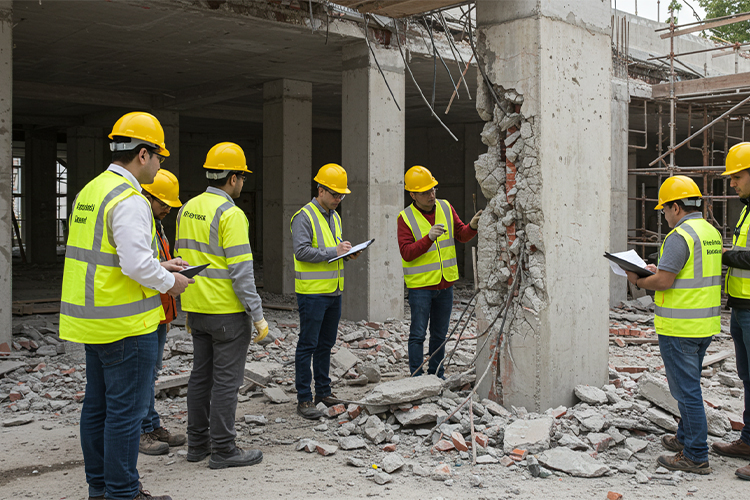
Once the plan is approved, they begin their work to replace or repair the column, if repair is feasible. In some cases, when the risks are too high, contractors install temporary shoring to bear the load, preventing eventual failure of the structure. After the structure is stabilized, depending on the column material, engineers and workers use various methods and tools to repair or replace the damaged column.
When the job is done, engineers will continue monitoring the column for any future signs of failure.
Column collapse is more common than many think and can happen to anyone. As a result, we strongly recommend that you take necessary actions to prevent this from happening.
How to Prevent Column Collapse
Here’s a table summarizing effective preventive methods:
| Design for redundancy | When building the structure, create alternate load paths to support the structure if a column fails |
| Follow building codes and apply strict quality control | adhere to the law and ensure correct detailing, reinforcement, and structural stability according to code |
| Retrofit existing columns | Use steel or FRP to strengthen existing columns and improve durability |
| Plan for unexpected excessive loads | Design columns during construction to handle extra loads from fire, earthquakes, or soil shifts |
| Seismic resilience | Utilize shear walls, dampers, or isolation systems to reduce earthquake stress |
| Prepare columns for more load | Design columns with extra strength, ideally capable of supporting twice the expected load |
Let’s wrap up with a quick recap.
Conclusion
Several reasons contributed to the collapse of the structural columns, which we have discussed here. Structural column failure is a serious threat that demands immediate action to avoid financial loss and structural collapse.
If you’re dealing with columns on the brink of collapse, contact Roll The Wall. Our expert team will inspect the situation.
FAQ
Can a single column collapse bring down a building?
Yes, a single-column collapse can cause a building to fail, especially if the structure lacks redundancy. This is called progressive collapse, where the load from the failed column transfers to others, triggering a chain reaction.
What causes columns to collapse?
Columns collapse due to factors like overloading, poor design or construction errors, and material degradation, such as corrosion or rot. Soil settlement, earthquakes, or fire can also weaken their stability. In many cases, it’s a combination of these issues rather than a single cause.
What should I do if a column looks cracked or leaning?
If a column looks cracked or leaning, evacuate the area immediately to avoid the risk of sudden collapse. Document the damage with photos, but avoid attempting DIY fixes. Contact a licensed structural engineer right away for inspection and repair guidance.
Can I repair a failing column myself?
No, repairing a failing column is not a DIY job. It requires engineering expertise and permits. Temporary fixes like patching cracks or adding supports can make the situation worse. Always hire a licensed structural engineer and contractor to ensure safety and compliance with building codes.
How often should columns be inspected?
Columns should be inspected at least once a year as part of routine structural maintenance. In high-risk environments (heavy loads, moisture, or seismic zones), inspections may be needed more frequently. Always schedule an immediate inspection if you notice cracks, rust, or leaning.
We’d love to hear about your experience. Have you ever encountered a structural column failure? How did you notice the danger? What actions did you take to resolve the issue? Share your knowledge in the comments section.
